Expect the change to feel like a change
Retirement can be exciting and still feel unfamiliar. Losing the automatic rhythm of meetings, coworkers, deadlines, and a familiar role can take adjustment even when leaving work was completely your choice.
Life After Retirement
Retirement can change your calendar overnight, but adjusting to the new rhythm often takes longer. The transition can affect identity, relationships, routines, and the way you think about a productive day.


The Adjustment
Even a retirement you have looked forward to can require adjustment. The goal is not to recreate the structure you just left. It is to learn what kind of structure, purpose, connection, and freedom fit the person you are now.
Retirement can be exciting and still feel unfamiliar. Losing the automatic rhythm of meetings, coworkers, deadlines, and a familiar role can take adjustment even when leaving work was completely your choice.
A career may describe what you did for decades, but it is not the full answer to who you are. Relationships, values, interests, faith, experience, curiosity, and contribution can become larger parts of how you define the next season.
A few consistent routines can make freedom easier to enjoy. Build anchors around health, people, interests, service, learning, or projects while protecting the flexibility that made retirement appealing in the first place.
You do not need to decide immediately what the next twenty years will look like. Pay attention to what gives you energy, what you miss, what you do not miss, and which parts of the new routine begin to feel worth keeping.
You can be completely ready to stop working and still be surprised by how different the first few months feel. For decades, your calendar may have told you where to be and what needed your attention. Retirement can remove that structure in a single day, but your habits and identity do not change that quickly.
That is one reason I would not judge retirement too early. If the first few weeks feel strange, it does not mean you made the wrong decision. It may simply mean you are learning a new rhythm. The first year of retirement can be a useful season for decompression and experimentation before you make major commitments.
Some people respond to an empty calendar by filling it immediately. Others enjoy the break for a while and then realize they miss having reasons to get moving. Neither response is wrong. The goal is to find a balance where your week has enough purpose and connection to feel meaningful without becoming as rigid as the career you just left.
Start with a few anchors. That may be exercise, a standing family day, church, a class, a volunteer commitment, golf, a project, or time with friends. Then protect open space. Retirement should still have room for spontaneity.
As your routine settles, pay attention to the larger question of finding purpose after retirement. A schedule can organize your time, but purpose is what gives that time meaning.
From Ed
Retirement is a major life transition, and I think we sometimes underestimate that. You can spend thirty or forty years following a routine and then suddenly wake up with complete control of your time. It is perfectly normal if that takes some adjustment. You do not have to figure out your entire retirement in the first few months. Give yourself some time, pay attention to what brings you energy, and allow your new routine to develop.
Common Questions
There is no single retirement formula. These answers are a starting point for thinking more clearly about what fits your life.
There is no standard timeline. Some people feel settled quickly, while others need months or longer to build a new routine and identity. Give the transition enough time before deciding what retirement is supposed to feel like.
Wanting retirement and missing parts of work can both be true. You may miss structure, social contact, responsibility, or the identity that came with your career even if you do not miss the job itself. Feeling lost can be a signal that the new rhythm is still taking shape.
A few recurring commitments can help, but you do not need to schedule every hour. Build around the things that support your health, relationships, interests, and purpose, then leave room for the freedom you wanted.
From Ed's Writing
These essays explore the same questions from a broader next chapter perspective.
A useful companion for slowing down, understanding the transition, and resisting the pressure to solve everything immediately.
Explore this ideaComplimentary Audiobook
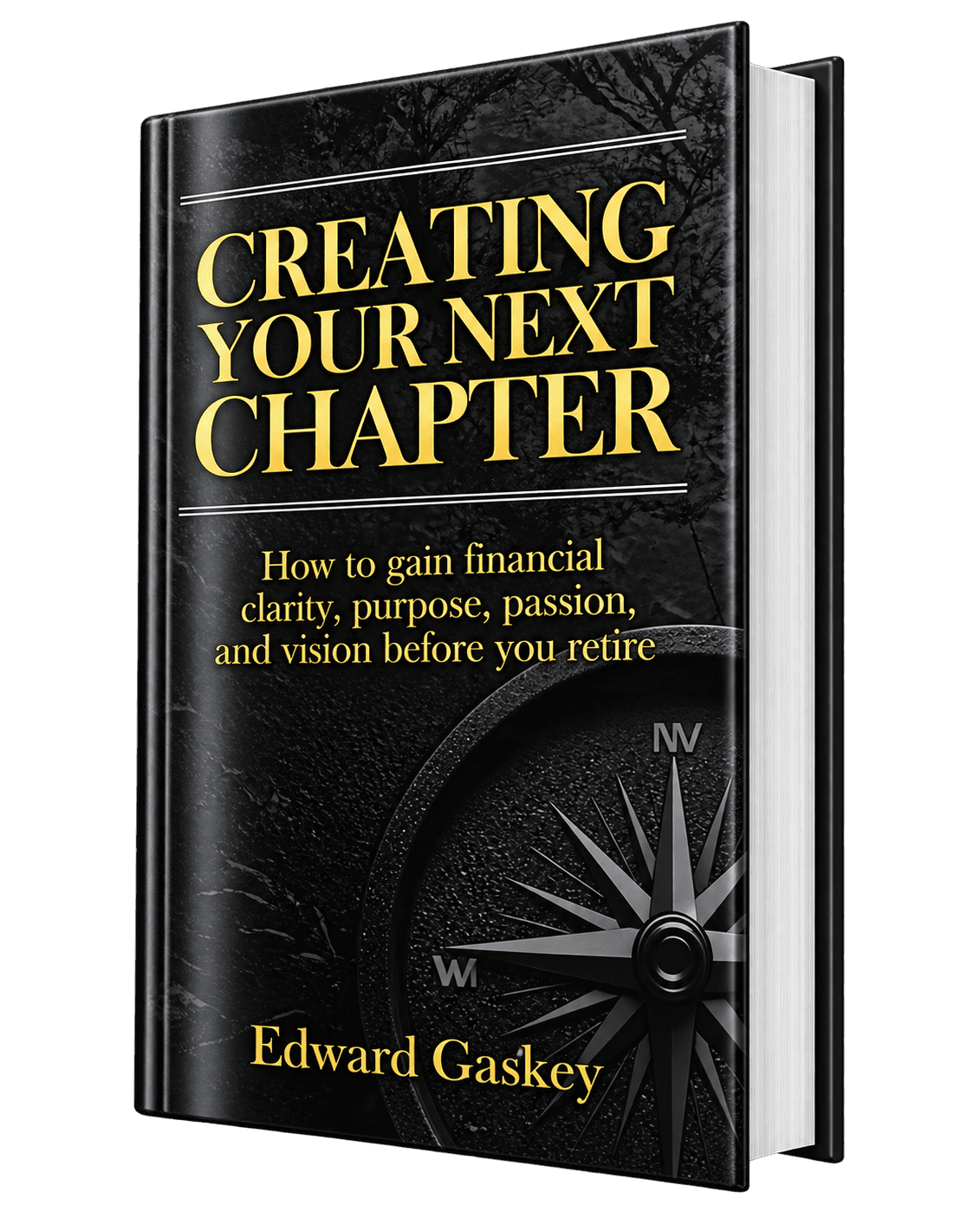
Ed's audiobook explores clarity, purpose, passion, vision, and how to think more intentionally about the life you want to build after work changes.
Your Next Step
Give yourself room to adapt, stay connected to the people who matter, and let clarity about the next chapter grow through experience.